
Teenage years involve a lot of change, as you're developing life skills and becoming more independent.
New stresses and worries can come along with change. Sometimes it can be hard to tell if what you're feeling is normal, or if you're experiencing symptoms of a mental health condition.
So many people have been where you are, and there are people who can and want to help you. Letting someone know how you're feeling is the first step.

If you have concerns about your mental health, you are not alone. According to the CDC's Youth Mental Health Status Data:
A NAMI survey asked teens ages 12-17 about their own mental health. The poll found that most teens are comfortable talking about mental health, but often don’t start the conversation. Learn more about the key survey findings on NAMI.org

Click image to enlarge or download
Youth and young adults experienced a unique set of challenges during the COVID-19 pandemic — isolation from peers, adapting to virtual learning, and changes to sleep habits and other routines. It's important to understand the significant impact of these experiences on young people’s mental health — and the importance of providing the education, care and support they need.

Click image to enlarge or download
Everyone has bad days. But it’s important to speak up if it feels like all your days are bad days, or if you’re struggling with feelings, emotions, thoughts or behaviors that:
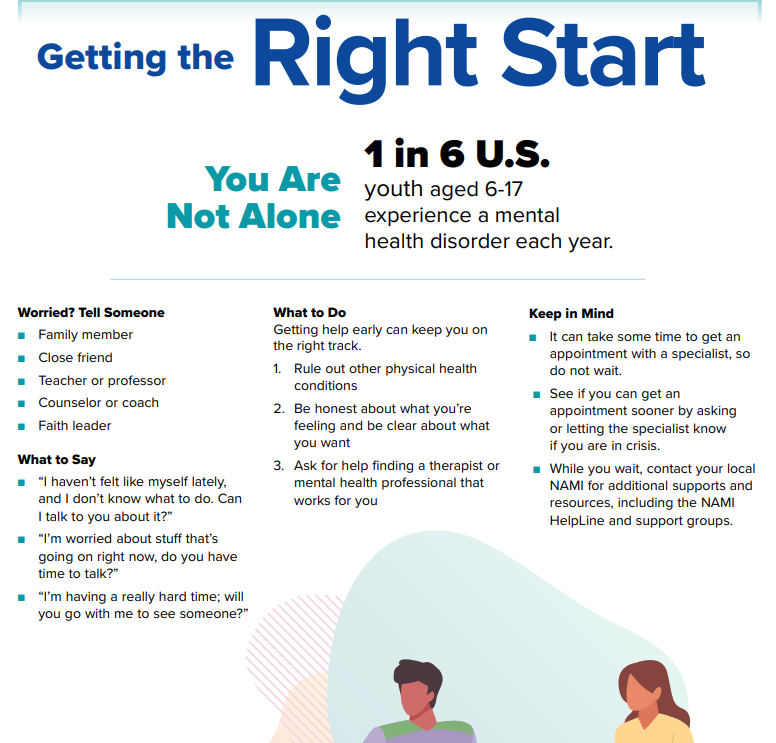
If you have concerns about your mental health, or are experiencing symptoms that are affecting your everyday life, it’s important to tell someone how you’re feeling.
Talk to a parent, guardian, or adult you trust, including close family friends, teachers, school counselors, coaches, club leaders or faith leaders. Sometimes, an older sibling, grandparent, aunt or uncle is easier to talk to than a parent.
This should be a person who:
Click image to enlarge or download
Asking for help is hard. It’s normal to feel uncertain or awkward about sharing something personal, like concerns about your mental health. A little planning can make the conversation easier, and you’re likely to get better results.
Visit NAMI.org for tips on how to talk to your parents or guardian.

At NAMI Jacksonville, our mission is to support and improve the quality of life for people and families dealing with mental illness and co-occurring substance use disorder through compassion, education, and advocacy.
NAMI Jacksonville, an affiliate of the National Alliance on Mental Illness, is a 501(c)3 not-for-profit organization.
.svg)
.svg)
.svg)
.svg)
NAMI Jacksonville Florida
40 E. Adams Street, Suite LL05
Jacksonville, FL 32202
904-724-7782
admin@namijax.org
SMS Program: NAMI Jacksonville provides informational text messages to help connect individuals with support and resources. By texting YES, or by starting a text conversation with NAMI Jacksonville you agree to receive text messages from NAMI Jacksonville. Message frequency varies. Messaging & data rates may apply. Unsubscribe at any time by replying STOP or clicking the unsubscribe link (where available). Phone numbers are not shared with third parties. Reply HELP for assistance. Questions? Email admin@namijax.org. | Privacy & SMS Terms
© 2026 NAMI Jacksonville Florida, Inc. | All Rights Reserved